Lietuvių
Bee Pollen, Beeswax, Work In The Apiary, Apitherapy, Bees, Honey, Bee Bread
Bees

11
Jan
Jan
The Food and Agriculture Organization of the United Nations (FAO) has estimated that 71 of the 100 crops that provide 90% of the world’s food are pollinated by bees. Most crops grown in the European Union depend on insect pollination. In addition to the most important value of pollination to maintain biodiversity, the annual monetary value of pollination is estimated at hundreds of billions of euros. Aristotle called honey the nectar of the gods. Throughout history, unprocessed honey, pollen, propolis, and royal jelly have been valued as both food and medicine. Now science confirms this ancient wisdom.
Honeybees make up only a small percentage of all bee species. They are the only surviving group of bees from the Apini tribos belonging to the genus Apis. The honeybee is one class of insects. These insects are members of the subfamily Apinae that produce and store honey. The bee belongs to the order Hymenoptera, one of the most advanced groups of insects, which is characterized by social life and the organization of individuals in the family. The bee colony functions as a “superorganism” where respiration, nutrition, reproduction, and defense are detected at both the individual and social levels.
The bees are well known for their collection and storage of honey, impressively large nests created using wax secreted by the bee workers in that family. Honeybees live in hives (families). The main features of the bee family are the division of labor among its members. A beekeeper in a thriving apiary must understand that a bee colony is a family of 30,000 to 50,000 individuals.
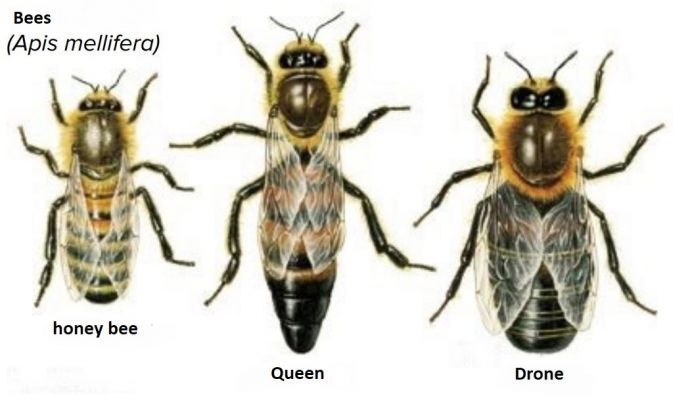
The bee family requires three components: the mother, a number of drones, and an “army” of bee workers. All of them can ensure the reproduction of bee larvae. Every family member has a certain task during the year that is necessary for the continuity of the family.
The population of the hive is divided into three types: